Healthcare
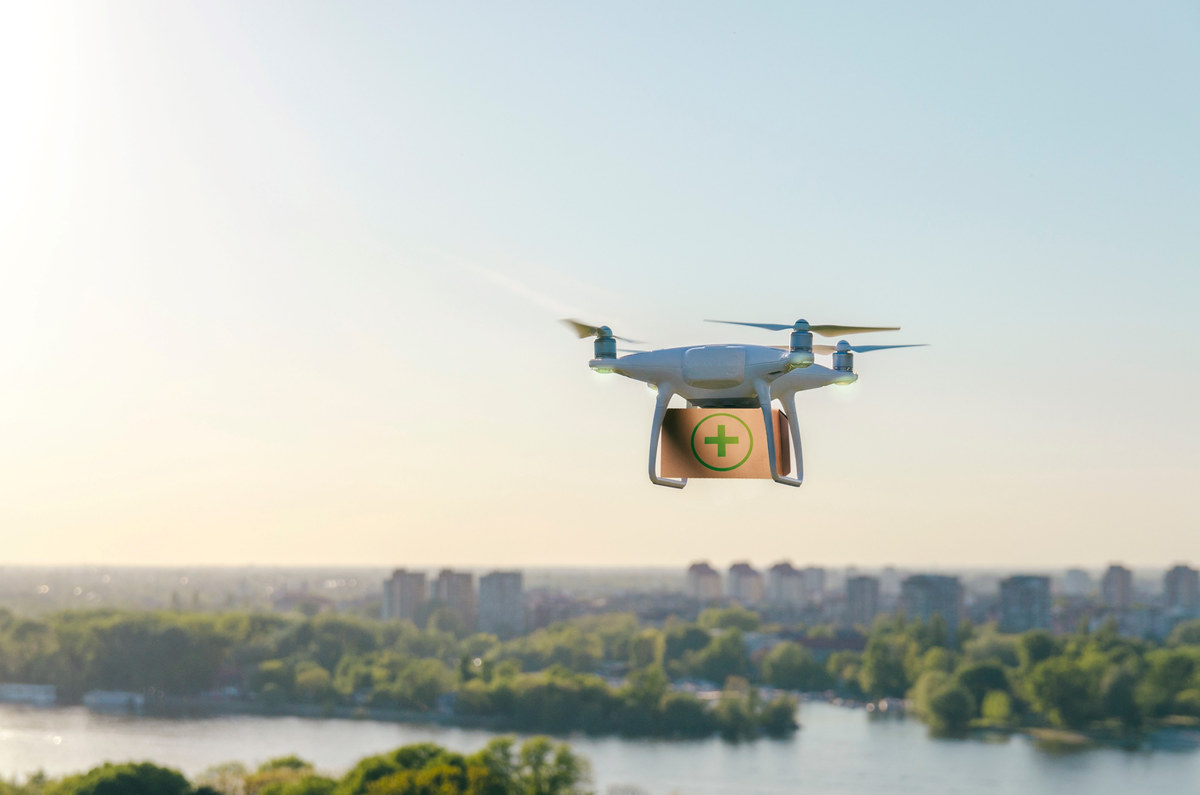
How are medical drones elevating the healthcare industry?
Medical drones are transforming healthcare delivery with faster emergency response, improved patient care and remote access solutions. Find out how!


Medical remote monitoring, although recent in its current form, is based on strong historical roots. As early as the 1940s, the invention of the first portable electrocardiogram (ECG), the Holter, marked a turning point by making it possible to track cardiac activity remotely. A few decades later, devices such as the GlucoWatch, introduced in 2001, helped broaden access to continuous glucose monitoring for diabetic patients.
Remote patient monitoring experienced a significant acceleration during the COVID-19 pandemic, which highlighted the importance of ensuring medical follow-up while limiting patient travel to relieve the burden on hospitals. This momentum is supported by national initiatives aimed at permanently integrating remote monitoring into care pathways. In France, the ETAPES program, launched as part of the pilot projects provided for by Article 51 of the LFSS 20181Dgos. (2025, July 3). Article 51 : expérimentations en cours – Ministère du Travail, de la Santé, des Solidarités et des Familles. Ministère Du Travail, De La Santé, Des Solidarités Et Des Familles. https://sante.gouv.fr/systeme-de-sante/parcours-des-patients-et-des-usagers/article-51-lfss-2018-innovations-organisationnelles-pour-la-transformation-du/les-experimentations/article/article-51-experimentations-en-cours, perfectly illustrates this desire for organizational innovation. These programs promote the development of sustainable models, adapted to patient needs and to strengthening healthcare systems.
In this context, MedTech is revolutionizing medical remote monitoring, already firmly established in 30% of healthcare systems in Europe in 2023.
In this article, Alcimed explores the technologies used and the pathologies targeted by medical remote monitoring.
Medical remote monitoring requires appropriate equipment, including sensors, mobile applications and digital platforms, AI, integrated systems, and other emerging technologies. These technologies, used alone or in synergy, rely on both hardware and software advances, which is why MedTech is at the heart of innovations in this field.
Sensors are central to remote monitoring, collecting vital data in real time. These medical devices, often portable or implantable, measure parameters such as heart rate, blood pressure, or glucose levels.
Example: Abbott’s FreeStyle Libre, a glucose sensor for diabetic patients, is a flagship example. This medical device attaches to the back of the arm and continuously measures glucose levels in the interstitial fluid. The data is transmitted to a mobile application via Bluetooth, allowing patients and doctors to monitor glucose variations in real time. This technology reduces the need for finger pricks and improves treatment management.
Mobile applications and digital platforms are essential interfaces for centralizing, visualizing, and analyzing data from sensors. They facilitate communication between patients and healthcare professionals, while offering educational tools and reminders that promote treatment adherence.
Example: Roche’s MySugr app, designed for diabetic patients, not only tracks glucose but also estimates the necessary insulin doses depending on meals or physical activity. Data can be synchronized with other connected medical devices and transmitted directly to the physician for more personalized monitoring. This approach improves patient autonomy while maintaining a close connection with the healthcare system.
Artificial intelligence (AI) plays an increasingly central role in analyzing the collected data. Thanks to advanced algorithms, medical remote monitoring systems can detect trends or anomalies in vital parameters, often even before symptoms are felt by the patient.
Example: The CardioLogs solution, now offered by Philips, uses AI-based algorithms to analyze ECGs and identify arrhythmia risks or other cardiac anomalies. This system, used in several hospitals, helps prioritize patients requiring rapid intervention, thereby improving healthcare responsiveness.
Moreover, interoperability is crucial for integrating data from different medical devices and platforms into a centralized system. Health information systems (HIS) make it possible to view all a patient’s parameters in real time and to coordinate care optimally.
Example: Platforms such as those from Epic Systems consolidate data from various connected sensors, applications, and medical devices within an electronic health record (EHR). This type of system is commonly used in American hospitals and is beginning to be implemented in Europe. Since the data is accessible to all relevant healthcare professionals, patient management is not only more efficient but also better coordinated.
Finally, recent innovations in medical remote monitoring open new perspectives for even more precise and personalized care. Among these, ingestible biosensors, advanced telemedicine devices, and virtual and augmented reality technologies play a major role.
Example: One of the most striking innovations is Proteus Digital Health’s ingestible sensor, designed to monitor treatment adherence. This small device, integrated into a pill, is activated upon contact with gastric fluids after ingestion and transmits information on medication intake and physiological parameters through a patch worn on the skin. These data are then accessible to both the patient and physician via an application.
Thus, medical technologies, although heterogeneous, work in synergy to provide optimized care. They are radically transforming the way patients are monitored, facilitating remote monitoring, and thereby improving both the efficiency and accessibility of healthcare for all. In this context, MedTech and the innovations that accompany it play a central role in increasing access to medical remote monitoring practices, with a wide field of application considering the pathologies involved.
Discover how our team can support you in your innovation projects related to medical devices >
Medical remote monitoring is mainly aimed at pathologies requiring continuous or regular follow-up, in order to improve patient care while optimizing medical resources.
Chronic diseases, which affect millions of people worldwide, are the main target of medical remote monitoring. These conditions require rigorous management to prevent complications and maintain optimal quality of life.
Example: Diabetes is one of the first pathologies to benefit widely from remote monitoring. Devices such as FreeStyle Libre allow patients to be alerted in real time in the event of hypoglycemia or hyperglycemia. This data can be directly shared with healthcare professionals to adjust treatments. Similarly, for heart failure, solutions such as Medtronic CareLink monitor data from connected pacemakers, thereby reducing the risk of re-hospitalization.
Chronic respiratory conditions, such as asthma or chronic obstructive pulmonary disease (COPD), benefit from improved follow-up thanks to medical remote monitoring. These diseases require proactive management to prevent severe exacerbations.
Example: Solutions such as those offered by Propeller Health integrate sensors on inhalers used by asthma patients. These medical devices track usage habits and detect signs of an imminent exacerbation.
Cancer patients often require close monitoring to track side effects from heavy treatments such as chemotherapy, and to quickly adapt their care.
Example: In the United States, platforms such as Chemotherapy Care Companion monitor in real time symptoms such as nausea, pain, or fatigue related to chemotherapy. Oncologists can then intervene if the patient’s condition deteriorates, thus optimizing treatment management.
Patients who have undergone surgery or who suffer from acute conditions can be monitored remotely to quickly detect complications and avoid unnecessary consultations.
Example: After cardiac surgery, post-operative remote monitoring programs have demonstrated a reduction in rehabilitation times through monitoring vital parameters (heart rate, blood pressure) via connected medical devices. This model is also applied to monitoring post-operative infections, with smart sensors capable of detecting the first signs of inflammation or fever.
Finally, remote monitoring is particularly suited for elderly people or those with increased fragility, as it allows early detection of health deterioration and intervention before the situation worsens.
Example: Systems such as LifeFone can monitor daily activities, detect falls, and send automatic alerts to caregivers or relatives. These devices sometimes integrate cardiac or respiratory disorder detection features, further enhancing the safety of the most vulnerable patients.
By targeting a wide range of pathologies, elderly remote monitoring proves to be a valuable tool for improving care quality and healthcare system responsiveness. Moreover, by facilitating home monitoring, it eases the burden on hospital infrastructure while providing patients with greater autonomy and a better quality of life.
Medical remote monitoring, driven by MedTech, is revolutionizing patient follow-up while improving the efficiency of healthcare systems. Although technical and ethical challenges remain, upcoming innovations such as biosensors or artificial intelligence pave the way for increasingly connected and preventive medicine.
About the author,
Agnès, Consultant in Alcimed’s Healthcare team in France
Healthcare
Medical drones are transforming healthcare delivery with faster emergency response, improved patient care and remote access solutions. Find out how!
Healthcare
Challenge n°1: embracing organizational change to successfully implement digital care pathways Change in workflows and processes Digitalizing the patient pathway requires a fundamental change in ...
Healthcare
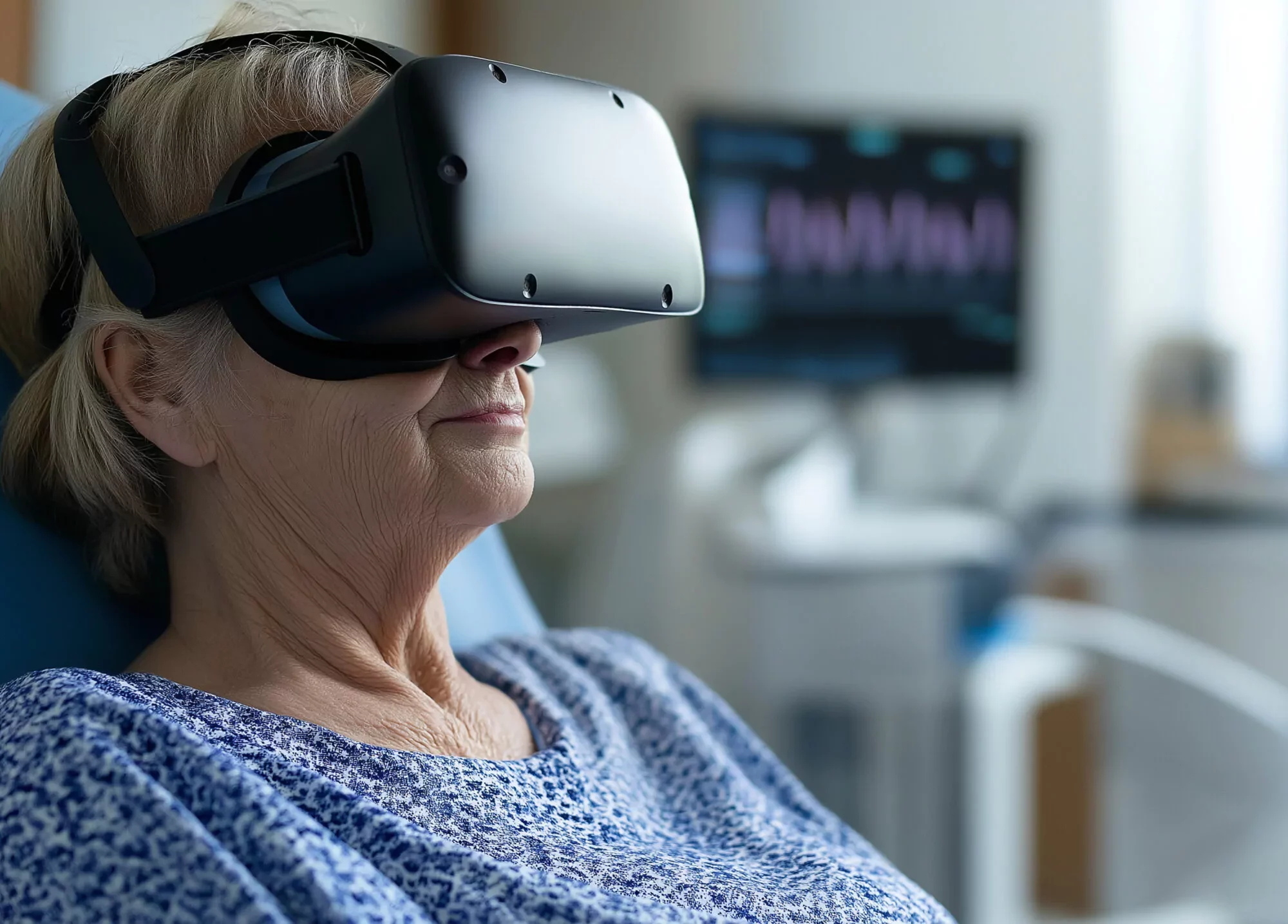
What is virtual reality? The first volume of the Treatise on Virtual Reality, published in 2006, defines it as “a scientific and technical field using computing and interfaces in order to simulate ...